Cheap Meat is an Illusion

Photo courtesy of jhenryfair.com

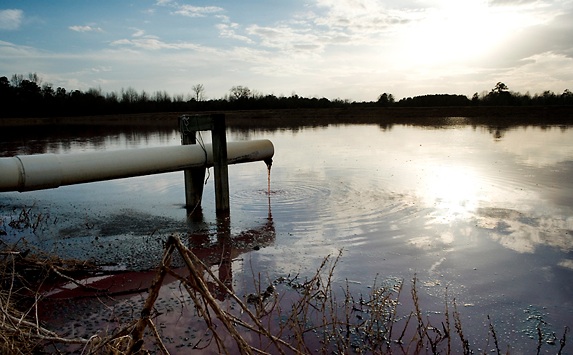
Hog waste disposed into lagoon
Photo courtesy of jhenryfair.com

Wendy’s Baconator®, a half pound beef burger smothered with two yellow slices of cheese and six thick slices of bacon, costs a little more than $4. Perdue’s® 12oz pack of dinosaur shaped chicken nuggets goes for $3.99. Two Tyson® chicken breasts, averaging 24oz, can be found for as little as $7. In the United States, meat is cheap and available and corporate behemoths like Tyson and Perdue dominate the meat markets. The retail price of industrialized meat stays low in part because of the prioritization of profit over all noneconomic factors, such as the environmental wellbeing and conservation. The environmental costs of the livestock sector are monumental. Industrial animal farming pollutes drinking water, contaminates soils, spreads disease, and emits massive amounts of greenhouse gases responsible for heating the earth’s atmosphere. These environmental costs and consequences are externalized by big agribusiness, while the public, nongovernmental organizations (NGOs), and government agencies are often left to finance and address all damages.

As detailed in the last blog post, the industrial livestock sector has moved towards a system that maximizes production and profitability. The pursuit of these goals prompted large-scale farms to introduce antibiotics to animal feed, pack more animals into tighter spaces, and speed up production practices. Further, government subsidies and deregulation facilitated the rise of industrial animal farms. Tufts University, for example, estimates that between 1997 and 2005 the United States’ industrial livestock sector saved over $35 billion with the aid of federal farm subsidies. Oftentimes, such farm policies, the maximization of profit, and the wellbeing of the environment come into conflict, and livestock operations continually trample the health of the natural world.


Continue reading

The Dangers of Antibacterial Soap

Hand soap with Triclosan. Courtesy of CAPL Washington and Jefferson College

When buying soap and cleaning products, most consumers purposefully purchase brands that are known for being antibacterial. It has been well advertised that antibacterial products are necessary for keeping people and their families safe from getting sick; as it turns out, this assumption that antibacterial is better is not being confirmed by modern research.  Additionally, the active ingredient in antibacterial soap, triclosan, is bad for the environment and potentially dangerous for humans.

Triclosan is a molecule that contains mostly carbons and chlorine, and was first patented in 1964. While that molecular makeup seems harmless, especially considering all healthy, organic compounds contain carbon and chlorine is a common atom that humans are exposed to, the particular structure may actually be detrimental to the environment and human health.
Continue reading

Is the United States Ready for an Orbital Solar Power Station?

The ISS streaks across the sky over Sandbanks in Dorset, England. Image courtesy Chris Daborn/Flickr Creative Commons.

On some clear nights, if looking up at the night sky, one might catch a glimpse of bright shining objects moving rapidly across the atmosphere, flashing in the dark like a collection of short-lived falling stars. This object is the International Space Station, its hulking football-field-sized metal frame and solar panel array reflecting light from the sun back to Earth.

On Tuesday, March 25th, 2014, American astronaut Steve Swanson and two Russian cosmonauts blast off in Russia’s Soyuz spacecraft, heading to the International Space Station (or ISS for short) to take their place as part of the crew for six months. NASA joyfully tweeted through their NASA_Astronauts Twitter handle, “And follow #Swanny as he becomes first @NASA_Astronaut to Instagram from space!”

Not only will Steve “Swanny” Swanson Instagram from orbit aboard the ISS, he and his fellow crew mates use the internet, heat up their food, and breathe oxygen pumped throughout the station. All these tasks require power, but in space there are no coal plants or fossil-fuel burning electric plants, which contribute to global warming and dramatic upheaval for life where these kinds of energies do exist here on Earth. Instead, the ISS relies on the aforementioned solar array of eight panels to generate all energy needs during the typical sixth month stay of an astronaut on the ISS, which has been inhabited continuously by human crew members since November 2nd, 2000.

That means for over a decade, the ISS has relied solely on space-based solar power to operate.

Continue reading

Climate Change Influences On Land: Stories Of Terrestrial Animals

Pika sitting on a rock with a mouthful of food. Photo Courtesy of Chris Kennedy/ USFWS- Flickr Creative Commons

Climate change has been shown to be associated with dramatic changes to the terrestrial biosphere. Some of these changes include higher temperatures, the shrinking of glaciers, and shifts in animal and plant home ranges. Scientists have documented key species that are vulnerable to global warming and its effects on land. In national parks, some important species that are at risk which will be discussed further include the pika and the grizzly bear.

The discussion of specific wildlife stories can begin with the American pika. Pikas live on rock piles in cold temperature regions and cannot tolerate warmer temperatures exceeding 78 degrees Fahrenheit. They are undergoing consideration, by the US Fish and Wildlife Service, for threatened status. Pikas are related to rabbits and inhabit mountainous, alpine environments. Because they can die when exposed to warm temperatures above the threshold noted above, they move upwards in elevation, but they can only go so far before land runs out. Additional heating at higher elevations, changes in vegetation, and possible invasion by new predators, lead some scientists to believe that pikas may potentially be wiped out by due to the effects of global warming.

Continue reading

Can Scandinavia Help to Explain the Relationship between Sustainability and Happiness?

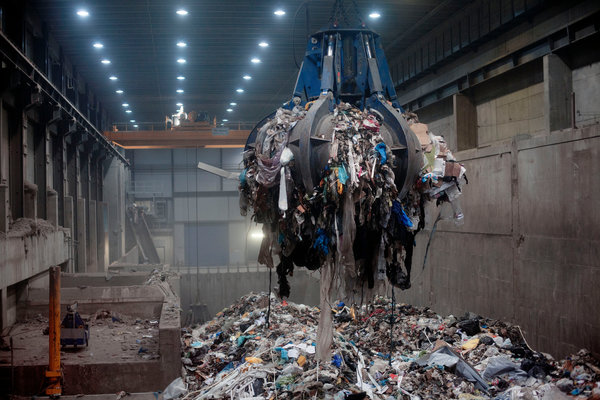
Garbage at an Incinerator in Oslo, Norway / Photo Courtesy of the New York Times

Garbage at an Incinerator in Oslo, Norway / Photo Courtesy of the New York Times

Norway and Sweden have a major trash problem.

They do not have enough.

While this may seem as victory to those of us in the U.S., both countries burn their garbage to heat and provide electricity to the vast majority of its cities. They incinerate household, industrial and even toxic waste.

Continue reading