Urban Empowerment Looks Good in Green

What if the path to empowerment for urban students is through the local park?

Eighteen 2013 Green Jobs graduates pose with Youth Programs Director Paulina Mohamed, second from right. Harpreet Kaur, sixth from left, says she loves “how connected I still feel to Green Jobs.” Photo courtesy of Van Cortlandt Park Conservancy.

Bronx, NY—In a borough with a disproportionate number of waste and power facilities and the highest child asthma hospitalization rate in New York City, high school interns at the Van Cortlandt Park Conservancy put on their garden gloves each summer to improve trails and weed out invasive species.

“It’s months later and I still feel like I’m part of Green Jobs,” said high school senior Harpreet Kaur, an alumna of the Conservancy’s Green Jobs for Youth program. Continue reading

The Truth about Travel: How Eco-Friendly is your Hotel?

View of the Pacific Ocean in Quepos, Costa Rica

View of the Pacific Ocean in Quepos, Costa Rica

Sitting on the cliffs of the Osa Peninsula in Costa Rica, next to the coast of the Pacific Ocean, is a small eco-lodge called Lapa Rios where visitors from around the world can escape from the modern world and find nature again. Nestled on 1000 acres of rainforest, this lodge offers 50 guests an opportunity to not only have fun, but to also lessen their impact on the fragile ecosystem of the rainforest while supporting the local economy. The experience is the epitome of the burgeoning field of ecotourism.

Ecotourism is a growing trend around the world. According to the International Ecotourism Society, the brand of travel has grown 20 percent to 34 percent each year since 1990. Ecotourism is defined by Merriam-Webster Dictionary as “the practice of traveling to beautiful natural places for pleasure in a way that does not damage the environment there.” And yet it has become so much bigger than just the environment. In order to participate in true ecotourism, lodges must take into account how they are affecting the local community. Ecotourism is about being local.  Continue reading

Environmental Racism: How Communities of Color Bear the Greatest Burden of the US’s Waste

Protest against the arrival of the first tuck, 1982. Photograph By: Jenny Labalme

In September 1982, citizens of the very poor, predominantly black, Warren County in North Carolina marched against establishing a PCB (highly toxic chemicals which were previously used in electrical equipment such as transformers and capacitors before they were banned in 1979) landfill in their community. Six weeks later, after the last truck loaded with contaminated soil arrived at the landfill location, the police had arrested 523 people protesting the toxic dump, including Democratic Congressman Walter Fauntroy. The situation also marked the first official documented use of the term “environmental racism”—a phrase that  implies race plays a factor in overlooking environmental and health concerns in neighborhoods occupied primarily by people of color. Although the term itself was coined quite a long time ago, this problem remains controversial today. According to the Merriam-Webster Dictionary, racism is “poor treatment of or violence against people because of their race.” By extension, environmental racism is often defined as “the disproportionate impact of environmental hazards on people of color.”

Continue reading

An Introduction to Livestock and the Climate Crisis

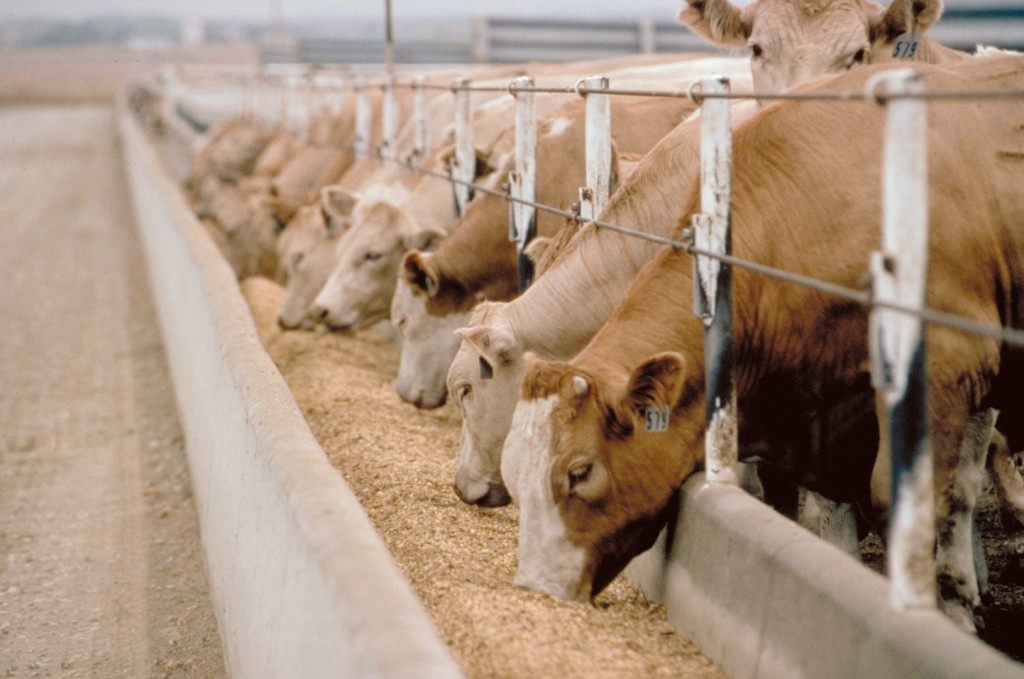
cattle_grain_feed

Grain-Fed Cattle
Courtesy of Institute for Livestock & the Environment

The industrial livestock sector is heating our planet at an alarming pace and will continue to do so unless sweeping changes are made to production practices and consumer habits. The contemporary conversation around climate change tends to focus on the consequences of an overreliance on fossil fuels. Meat production is often overlooked as a significant contributor to the climate crisis, despite emitting 18 percent of global greenhouse gases – a percentage point larger than that of all modes of transportation. Considering the ramifications of climate change, it is crucial to analyze and transform the relationship between meat production and the environment. Continue reading

Winds of Change: Redefining the Energy Market

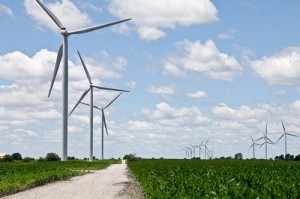
Meadow Lake Wind Farm

While driving north through Indiana en route to Chicago in the middle of the night, drivers will likely find themselves suddenly surrounded by a sea of red blinking lights. They don’t signify a nearby airport or some secret government operation. Instead, the red lights simply indicate the tops of turbines—or high tech windmills. In the sunlight, I-65 adopts a yellow-brick road quality, the sheer magnitude of the extraordinary wind farm that stretches for miles actually visible. The behemoths adopt a sleek and graceful quality, their blades dancing in sync high above the scattered tree line. This particular operation, the Meadow Lake Wind Farm, consists of 303 turbines that produce approximately 500 MW of power, or enough energy to power 150,000 to 300,000 homes per year. Meadow Lake Wind is one of 28 North American farms operated by Spain-based EDP-Renewables, whose combined output equals nearly 3,700 MW.  At the moment, growth of the wind industry in the US has been slow. But experts argue that with increased support of wind farming in the US, there is an opportunity to avoid sole reliance on nonrenewable fossil fuel sources for energy. One day soon, we may find ourselves not relying on the Kansas oil fields anymore.

Continue reading